
Don’t Guess With Your Health

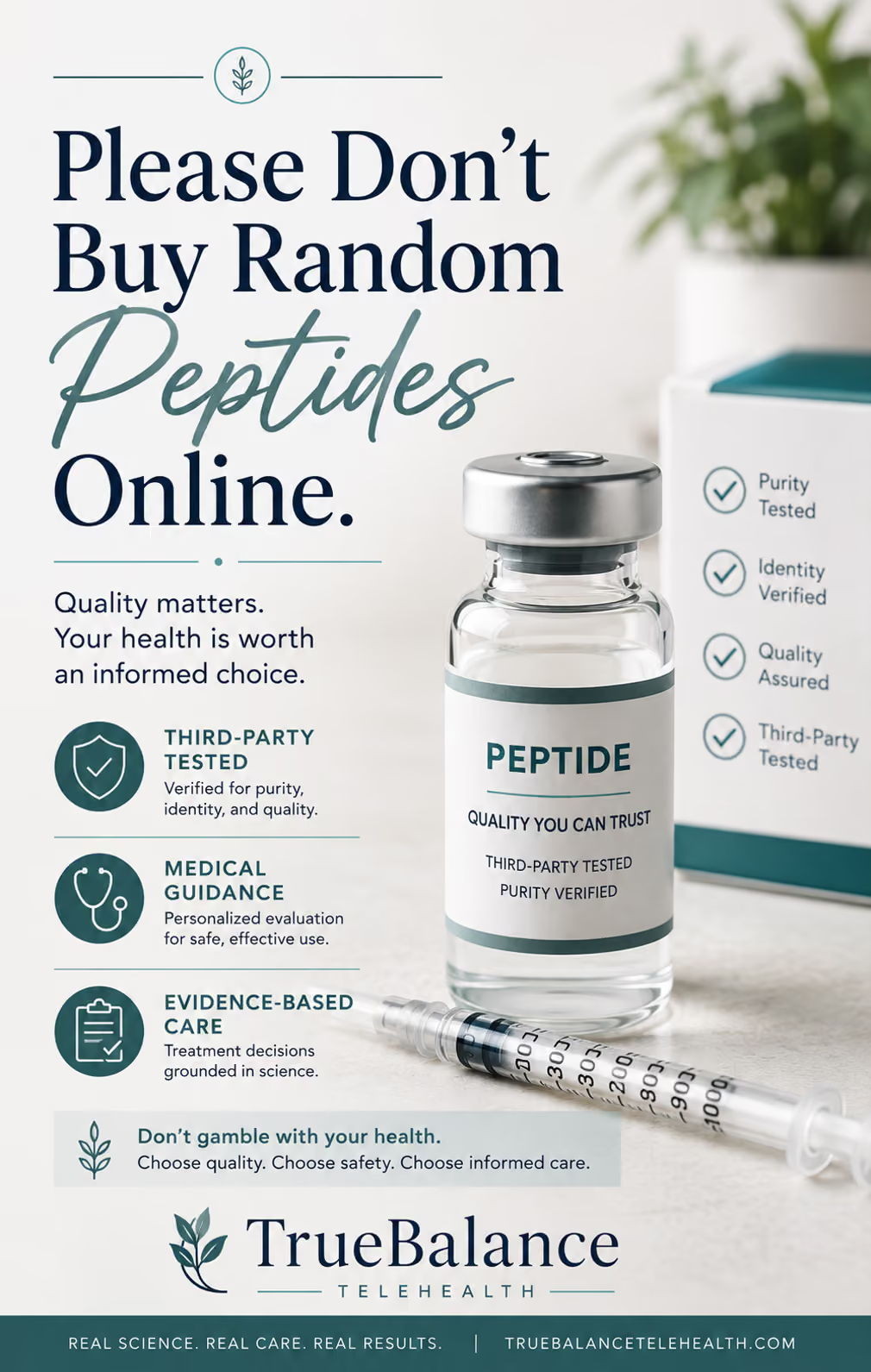
Peptides have become one of the hottest topics in health and wellness.
A quick search on social media will show people claiming peptides can help with weight loss, muscle growth, recovery, anti-aging, hair growth, and even longevity. Along with that growing interest has come an explosion of websites selling peptides directly to consumers often with little information about what's actually in the vial.
As a healthcare provider, I understand why people are curious. Some peptides are being actively studied, and a few have legitimate medical uses.
But here's my advice:
Please don't buy random peptides online.
Not because peptides are inherently "bad," but because you deserve to know exactly what you're putting into your body.
Peptides are short chains of amino acids that act as signaling molecules throughout the body.
Different peptides have different functions. Some influence hormone production, others affect appetite, tissue repair, inflammation, or metabolism.
While a handful of peptide medications have been approved by the FDA for specific medical conditions, many peptides discussed online are still considered investigational or are compounded under specific circumstances.
That doesn't automatically make them unsafe but it does mean they deserve thoughtful consideration and medical oversight.
Today, it's possible to order peptides from hundreds of online vendors.
Many are marketed as:
Yet the same websites often feature dosing protocols, injection instructions, and customer testimonials clearly implying human use.
That should raise an important question:
If the product isn't intended for people, how confident are you about what's actually inside the vial?
When someone tells me they're interested in peptides, my first concern usually isn't which peptide they want.
It's where they're getting it.
Depending on the source, there may be uncertainty about:
Without appropriate quality controls, there's no way to know whether the vial contains the labeled ingredient, the correct amount, contaminants, or something entirely different.
One of the most important ways to improve confidence in a peptide product is through independent third-party testing.
Depending on the product, this may include:
These tests cannot guarantee that a product is perfect, but they provide significantly more information than simply trusting a label on a website.
If a company cannot tell you how its products are tested, that's worth paying attention to.
Social media often promotes peptide "stacks" with the idea that combining multiple peptides will produce better or faster results.
In reality, more isn't always better.
Each peptide has its own proposed mechanism, potential benefits, unknowns, and possible side effects.
Combining several together may increase complexity without increasing benefit.
The best treatment plan is rarely the one with the longest list of injections.
One of the biggest misconceptions is that peptides can overcome poor sleep, inadequate nutrition, chronic stress, or untreated hormone deficiencies.
They can't.
Before considering peptides, it's important to address the foundations of health:
Peptides should never replace these basics.
Just because a peptide exists doesn't mean it's appropriate for every person.
Your medical history matters.
Current medications matter.
Your goals matter.
Certain health conditions may make specific peptides inappropriate, and some people simply may not benefit from peptide therapy at all.
A thoughtful evaluation helps determine whether a peptide is reasonable or whether another treatment is likely to be safer and more effective.
If you're considering peptide therapy, don't be afraid to ask questions.
For example:
If someone can't answer those questions or doesn't think they're important, that should give you pause.
Some peptide medications are FDA-approved for specific medical conditions. Other peptides are investigational or may be available through compounding under certain circumstances. Regulations vary depending on the specific peptide and how it is supplied.
No. Many peptides discussed online have not been approved by the FDA for general use.
No. "Research use only" means the product is not intended for human use. It should not be interpreted as evidence of safety or quality for personal use.
No. Third-party testing can increase confidence in a product's identity, purity, and consistency, but it does not eliminate all risks or guarantee clinical safety or effectiveness.